
Category Archives: News

Is Biomass Heat Still Worth It? Why the Sector’s Future Looks More Secure Than You Think

Hands holding biomass woodchip fuel — is biomass heat still worth it under the RHI

Many biomass owners have quietly written off their boilers. The RHI closed to new applications years ago, heat policy keeps shifting, and it’s easy to assume renewable heat has had its day. So is biomass heat still worth it? For most existing participants, the answer is a clear yes — and the picture is far more positive than the headlines suggest.

The Sector Just Took a Major Step Forward

This month the industry reached an important milestone. The Wood Fuel and Heating Association (WFHA) has launched as the first trade body dedicated solely to the UK wood fuel and heating sector.

Chaired by Terence McCracken, it brings together fuel producers, distributors, installers and the businesses that operate biomass systems day to day — under a single, organised voice. For an industry that supplies a large share of the UK’s renewable heat, dedicated representation is long overdue, and it matters more than it might first appear.

Why This Matters for Your RHI Payments

The decisions that affect your biomass income aren’t made on your site. They’re made at Ofgem and in Westminster — tariff reviews, audit policy, sustainability rules, and the future treatment of existing accreditations. Until now, the sector has had a quiet, fragmented voice in those rooms. A credible trade body makes sensible, workable rules far more likely.

More immediately, there’s a point many owners overlook: if you hold an RHI accreditation, you were awarded 20 years of support. A system accredited in 2015 still has the better part of a decade of payments left to run. That isn’t a closing scheme — it’s a live, income-generating asset.

What This Means for You

If you operate an accredited biomass system, three things are worth doing now:

  1. Know your remaining term. Check your accreditation date and how many years of payments you have left. Most owners underestimate it.
  2. Stay compliant. Your income is only secure while your system meets Ofgem’s requirements. Out-of-date heat meters and missing HETAS servicing records are the two most common reasons payments get reclaimed — see our guides on the 10-year meter rule and HETAS servicing.
  3. Understand what your system is worth. Accredited systems can change ownership and even location. If yours is underused, the remaining RHI income can be realised through a sale — or, if you need heat, buying an accredited system can turn a fuel bill into an asset. We cover this through our second-hand renewables service.

Our View

So, Is Biomass Heat Still Worth It? In our experience as an RHI consultancy, the businesses that do best from the scheme aren’t the ones with the newest kit — they’re the ones who stay on top of their compliance and understand the value of what they already own. The launch of the WFHA is a clear signal that biomass heat isn’t being left behind. The sector is professionalising, organising, and securing its place in the UK’s renewable heat mix.

Existing participants who keep their systems compliant stand to benefit from that, whatever policy decisions come next.

Useful Links

Get in Touch

Not sure how many years of RHI payments you have left, or whether your system is fully compliant? We’ve supported thousands of participants through compliance, audits and system transfers, and we can quickly assess your position.

📞 01324 619 425 📧 rhi@yourenergysource.co.uk 🌐 yourenergysource.co.uk

3 tips to tell If Your Heat Meter Is Out of Date

As discussed last month, Ofgem require all RHI participants to replace or recalibrate their heat meters every 10 years. This rule is enforced strictly, and Ofgem regularly reclaim payments when a heat meter is out of date or being used beyond its valid calibration period.

If your system is still recording heat with an expired meter, you are at real risk of having RHI funds taken back — sometimes for multiple quarters. Understanding exactly how old your meter is, and whether it is approaching the 10-year point, is essential to staying compliant and protecting your payments.

To help you make sure you stay safe and compliant, here are three simple ways to check the age of your heat meters and confirm whether your heat meter is out of date — before it becomes a problem with Ofgem!

  1. Look at the CE Stamp
heck if heat meter is out of date
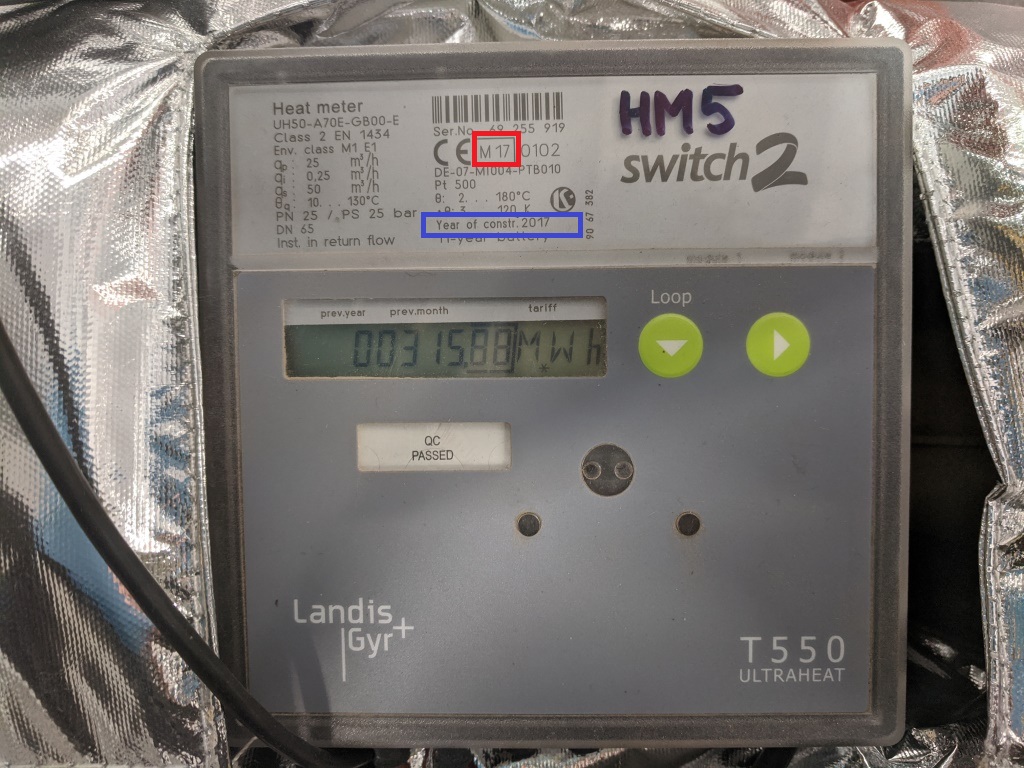
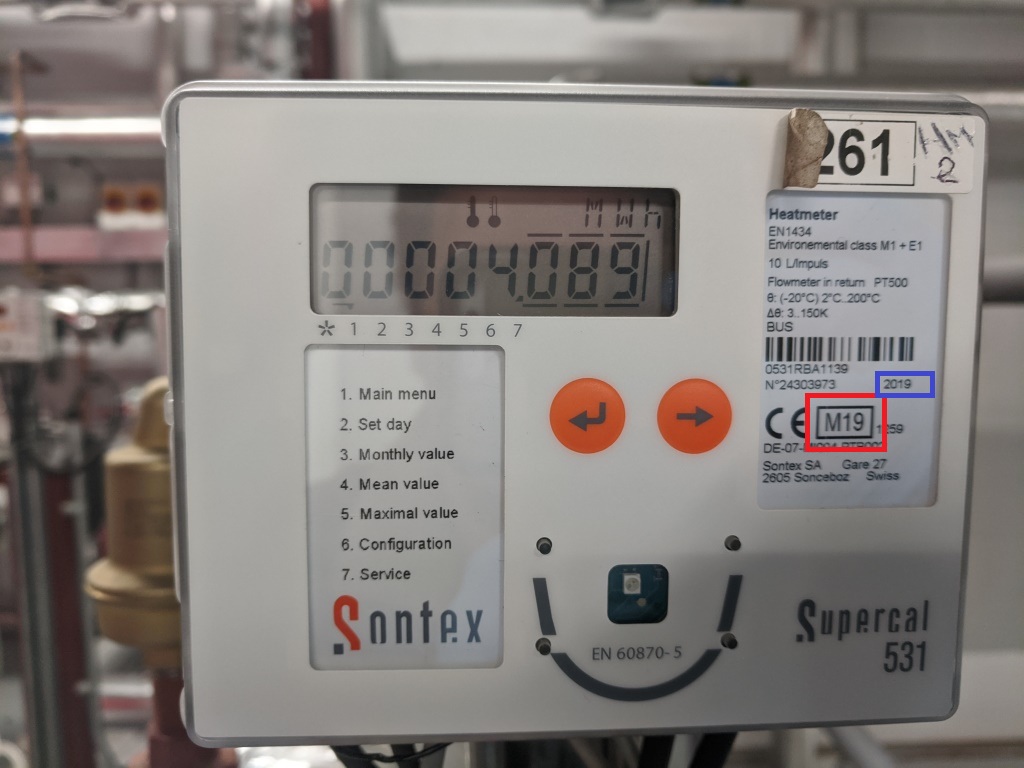
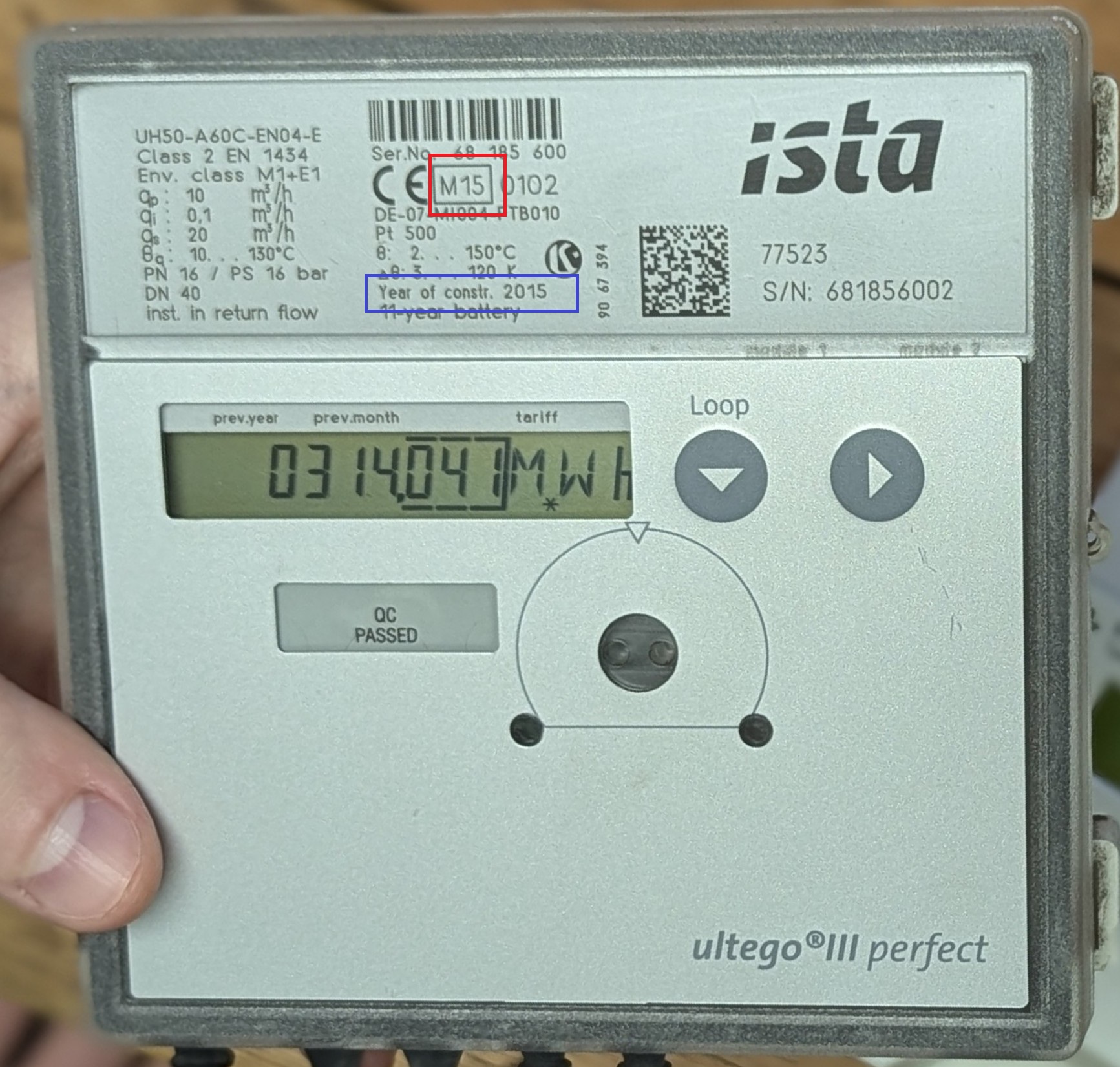
RHI HEAT METER SONTEX RED AND BLUE SQUARES SHOW THE YEAR OF MANUFACTURE

The most direct method is to look at the physical meter. By law, meters must have a CE stamp under the Measuring Instruments Directive.

Next to the CE stamp, look for a rectangular box containing the letter ‘M’ followed by two numbers (e.g., M19). See the Red squares in the examples below

  • What it means: These two numbers represent the year of manufacture.
  • Example: If it says M19, the meter was manufactured in 2019.
  1. Look at the meter manufacture date where shown
RHI heat meter expiry
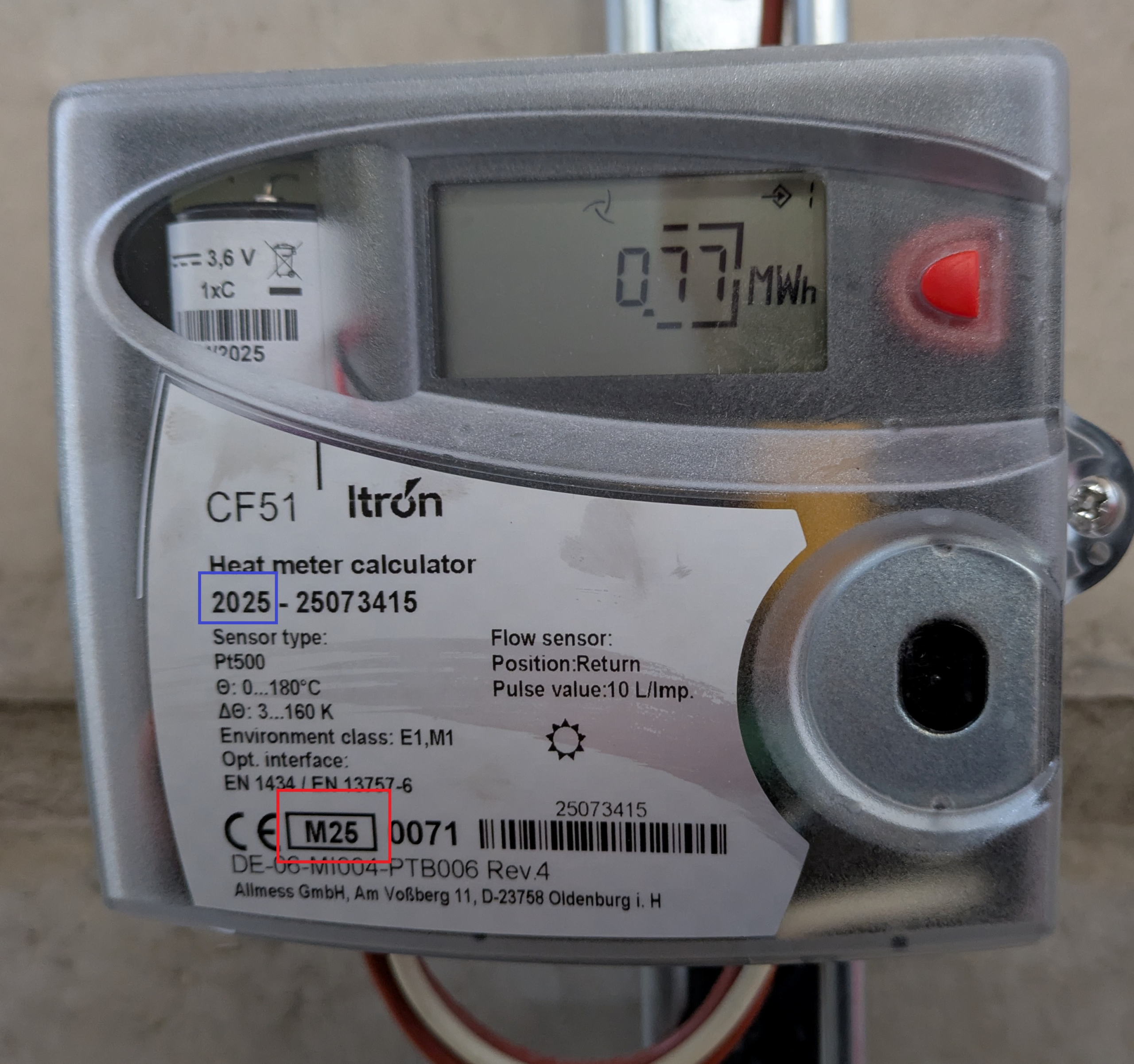
RHI HEAT METER Itron Red and Blud Squares show year of manufacture

Most heat meters will also explicitly display the full year of manufacture. This can appear in various formats depending on the brand, but it is usually clearly shown on the front face of the unit.

  1. Check Your Accreditation Date (The “Ofgem Method”)

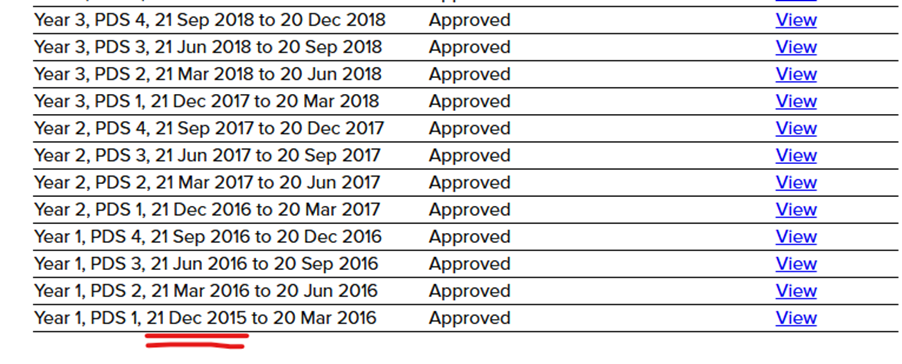
If you cannot access the meter, can’t find the documentation, or the physical markings are worn off, you should use your original accreditation date

In our experience as an RHI consultancy, this is the date Ofgem uses to determine when they will start recovering payments. For example, if your site was approved on 1st March 2015, you must replace your meter by 1st March 2025. Ofgem will likely recover any money paid to you after that 10-year deadline if the meter hasn’t been changed

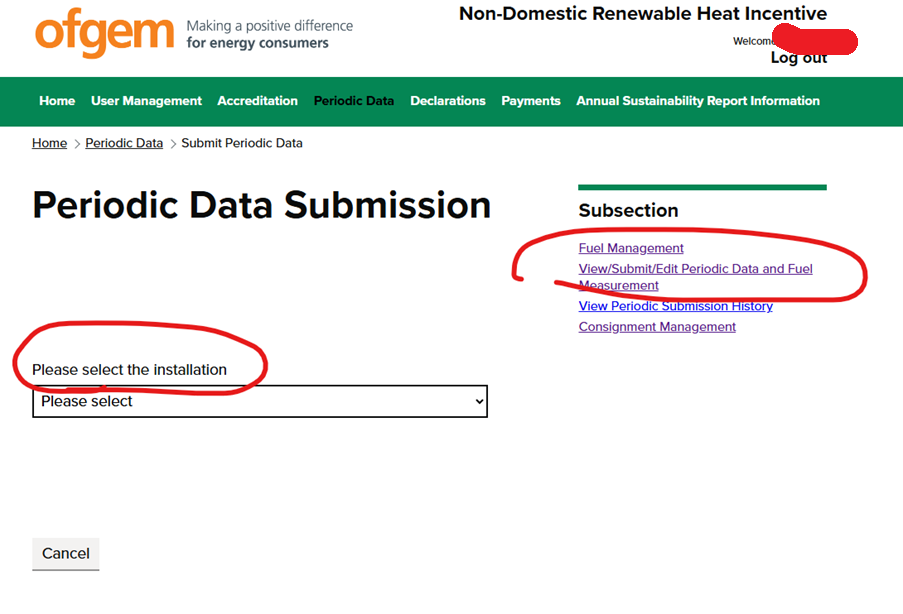
How to find your accreditation date: You can find this in your original approval email. If you cannot find that email, follow these steps on the Ofgem RHI Register:

  1. Log on to the Ofgem Portal.
  2. Click Payments (circled in red below).
  • Click on “View/Submit/Edit Periodic Data and Fuel Measurement”.
  • Select your installation from the dropdown menu.
  • Scroll to the very bottom of the list to find the first period. The start date of this first entry is your accreditation date.

What to do if your meter is expiring

Time is of the essence. If your meter is due to expire within the next 6 months, you need to plan your replacement immediately. Book your installer now to ensure the work is completed on time. Contact us for a list of installers in your area.

If you discover you are already late, change the meter straight away. Do not delay—do it now to minimise the risk of clawbacks.

Where to Buy RHI-Eligible Heat Meters

If you need a replacement heat meter, here are two reliable UK suppliers that stock MID-approved, RHI-eligible meters:

Always ensure the meter you purchase is MID-approved, correctly sized for your system, and installed by a competent engineer. If you’re unsure what you need, please get in touch.

Navigating Ofgem’s regulations can be tricky. If you are in a predicament regarding your meter dates, or if you need a reliable installer in your area, please speak to us.

As leading RHI consultants, we help businesses across the UK maintain compliance and protect their revenue. Whether you are looking for RHI consultants in Scotland or further afield, our team has the expertise to help you resolve these issues quickly.

📧 rhi@yourenergysource.co.uk
📞 01324 619 425
🌐 yourenergysource.co.uk

RHI Is Closed — But You Can Still Get Paid for Renewable Heat

While the Renewable Heat Incentive (RHI) is now closed to new applications, existing participants were awarded 20 years of RHI support for their renewable heat systems. That means boilers installed 10 years ago still have another decade of payments to run. This provides a unique opportunity for businesses to get paid for renewable heat — even though the scheme has officially closed.

Many of these systems are now underused or no longer needed. The owners might be selling a business or farm, restructuring a site, or simply no longer have sufficient heat demand.

Buying or Selling an RHI-Accredited System

The RHI allows accredited systems to change ownership and even move location.

This creates a valuable opportunity on both sides:

  • Sellers can recover value from systems they no longer use.
  • Buyers can acquire an existing, accredited system and continue to earn RHI income — turning what was once a fuel expense into an asset.

If you operate a site that requires heat for commercial or multiple domestic premises, this could be an ideal solution. Instead of paying thousands each year for oil or gas, you could be earning income for renewable heat.

Example: System Available for Sale

Output: 250 kW thermal
Tariff: 7.9 p/kWh
RHI start date: 29 December 2015
Annual Tier 1 RHI income: £24,913
Tier 1 payments remaining: £252,387

A system like this could generate around £25,000 per year in RHI payments while supplying heat to your business.

Eligible Uses for Heat

A huge range of businesses are finding new ways to get paid for renewable heat by purchasing existing RHI-accredited systems We work with a wide range of eligible sites and heat uses, including:

  • Hotels and leisure centres
  • Farms and grain drying
  • Factories and workshops
  • Multi-property developments such as flats or holiday lets
  • Hospitals, universities, and schools

If the heat is supplied for a commercial purpose — or across multiple dwellings — it’s likely to be eligible.

Compliance and Legal Considerations

There are a lot of complex and nuanced rules around this area of the RHI, for example, you cannot just sell the RHI itself, you must sell the entire accredited plant and the RHI.

Our team of very experienced RHI consultants manage these transactions daily.  We ensure your sale, relocation, and amendment is fully compliant with Ofgem requirements.

We’ve completed hundreds of successful RHI system transfers, plant sales, and compliance updates.
Learn more here:
👉 https://www.yourenergysource.co.uk/second-hand-renewables/

Useful Links

If you’d like to explore how your business could get paid for renewable heat, contact our compliance team.   

Get in Touch

Whether you’re looking to sell an existing RHI system or explore buying one, our team can help you assess eligibility, valuation, and compliance.

📧 rhi@yourenergysource.co.uk
📞 01324 619 425
🌐 yourenergysource.co.uk

4 Ways to Save on RHI Meter replacements

RHI Heat Meter Training

Why Do I Need to Replace My RHI Heat Meters

Ofgem are reclaiming RHI payments from participants who haven’t replaced their heat meters within the 10-year period.
If you’re not familiar with this requirement, read our earlier article:
RHI Warning: The 10-Year Meter Rule That Could Cost You Thousands

When Does the Clock Start Ticking

This is where things get unclear.
Is it the date of commissioning, installation, or accreditation?

While Ofgem haven’t given a consistent answer, their guidance states:

“All heat meters for RHI purposes must be re-calibrated every 10 years or within the period recommended by the heat meter manufacturer, whichever is the soonest.” – Ofgem Guidance 14.16

From our experience, Ofgem usually use the accreditation date as the latest allowable point.
So, in practice, you must replace or recalibrate your meters within 10 years of accreditation to remain compliant and avoid repayment.

Summary:
Replace your meters early, not late.
Once you pass the 10-year mark, Ofgem can reclaim payments.


1. Replacement Is Cheaper Than Recalibration

Although recalibration is technically an option, it’s rarely practical.
It means removing the meter, sending it to an approved test rig (none currently in the UK), waiting for its return, and reinstalling it — during which time your payments stop (r you take extraordinary effort and install a temporary meter).

In almost every case, it’s more cost-effective and practical to replace the meter entirely.


2. Replace Just One Meter

If your system has several meters, you may not need to replace them all.
We can often amend your RHI application so that only one meter needs to be replaced — saving both cost and downtime.


3. Replace On Time

Mark the replacement date in your calendar.
Replacing too early means you’ll repeat the process sooner than necessary.
Replacing too late risks repayment of RHI funds.

Aim to replace a few months before the 10-year deadline.


4. Save Your Time

Amending applications and updating metering details with Ofgem can be time-consuming.
Our compliance specialists handle this process daily — saving you hours of admin and ensuring your replacement is fully compliant.

You wouldn’t file your own tax return without an accountant; don’t manage RHI compliance without an expert.


Need Help With Meter Replacements?

We’ve supported thousands of RHI participants through meter changes, compliance amendments, and Ofgem audits.
Let us help you plan ahead and stay compliant.

Contact us:
📞 01324 619425
📧 rhi@yourenergysource.co.uk
🌐 yourenergysource.co.uk
RHI Warning: The 10-Year Meter Rule That Could Cost You Thousands

It’s now clear that heat meters must be replaced or recalibrated every 10 years. This is not new — but many participants are unaware of how strictly it’s being enforced.

We’ve seen several clients hit with repayment demands for failing to replace a meter after the 10-year mark — often unknowingly.

The 10 year RHI meter replacement clock is ticking

So when does the 10-year clock start?

This is where things get murky.

While Ofgem haven’t published a consistent position, they’ve said the 10-year deadline may be based on:

  • The original calibration date
  • The accreditation date
  • Or the installation date

But in most cases we’ve seen, they use the accreditation date as the latest allowable point.

Our advice:

  • Assume your accreditation date is the 10-year deadline
  • Don’t leave it until the last minute
  • Missing the deadline could cost you thousands in reclaimed payments

Next week, we’ll share 3 proven ways to cut costs and simplify the meter replacement process — including how to reduce the number of meters you need to replace.


📞 Need help now?

We’ve helped dozens of clients navigate this.

📧 info@yourenergysource.co.uk
📞 01324 619425
🌐 yourenergysource.co.uk

HETAS Certificates Now Critical for RHI Payments

HETAS Certificates Now Critical for RHI Payments

Ofgem has confirmed that RHI participants risk losing an entire year of payments if HETAS servicing records are missing.

In a recent Q&A between the Renewable Energy Association (REA) and Ofgem, the following was stated:

Q10: HETAS/HABMS Compliance
Will full-year payments be reclaimed if HETAS servicing records are missing?
A10: Yes, unless there’s a valid reason, the year is ineligible without HETAS records, though Ofgem may assess on a case-by-case basis.

This means that if you’re required to have your biomass boiler serviced by a HETAS-registered technician, and you fail to provide that documentation, Ofgem may reclaim the entire year’s RHI payments.


What You Should Do Now

🔍 Review your boiler’s HETAS servicing requirements
📁 Make sure all service records are up to date and accessible
📤 Upload records to the Ofgem portal (HABMS) without delay
🛑 Don’t assume it’ll be fine — act before an audit forces the issue


Need Help?

We’ve already supported dozens of clients facing documentation issues, and helped many avoid payment clawbacks through pre-audit reviews and appeals.

Call us on 01234 567890
or
📨 Get in touch for a quick check of your compliance position.